


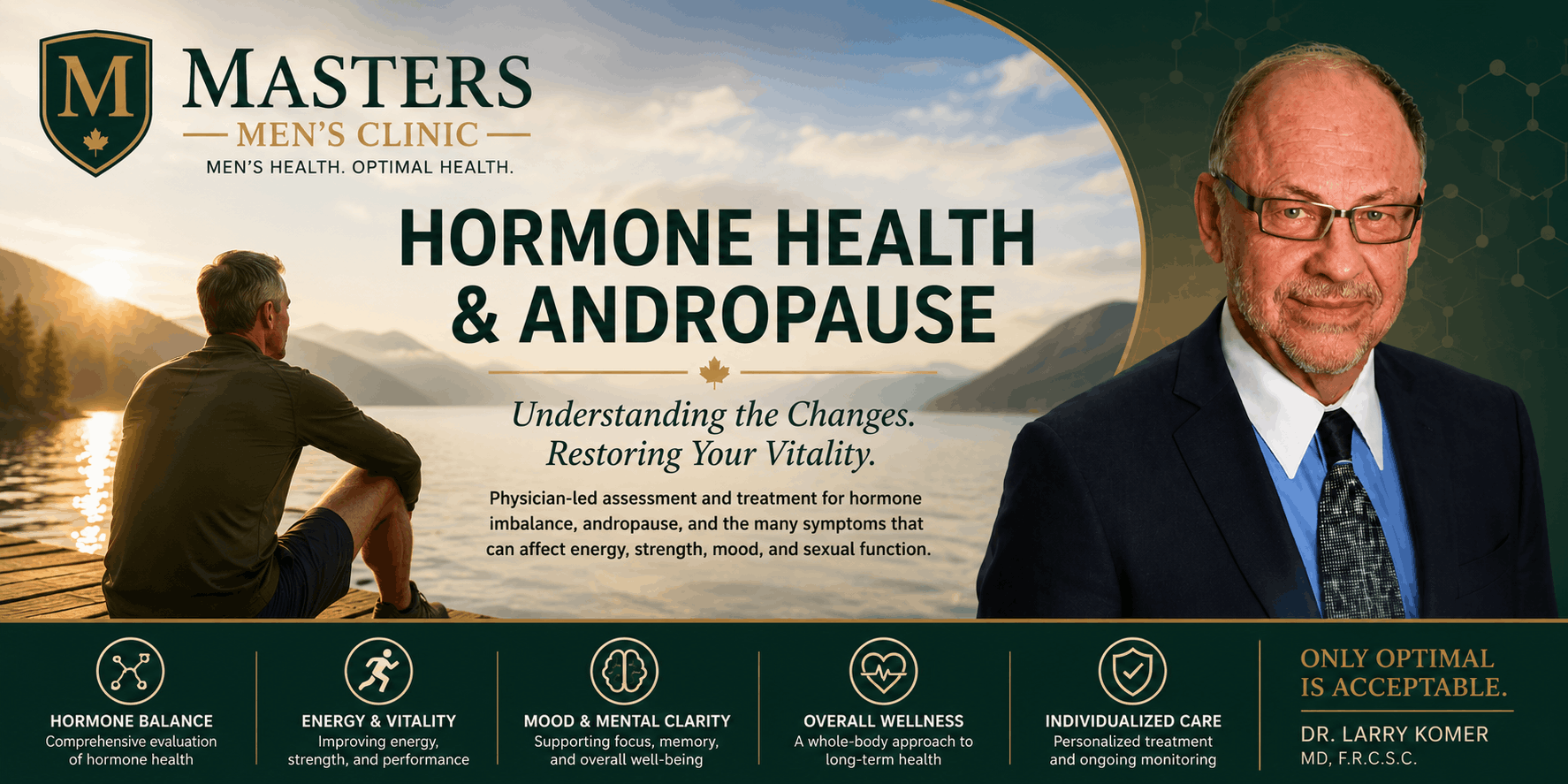
Hormone Health & Andropause
Understanding the Changes That Can Occur as Men Age
Hormones influence nearly every aspect of a man's health.
They help regulate energy, muscle strength, body composition, sexual function, mood, concentration, bone health, cardiovascular function, and overall well-being.
As men grow older, hormone levels may change gradually. For some, these changes are mild. For others, they may contribute to symptoms that interfere with daily life and long-term health.
Understanding these changes begins with a comprehensive medical assessment—not assumptions.
What Is Andropause?
Unlike the abrupt hormonal changes experienced during menopause, hormone changes in men usually occur gradually over many years.
Symptoms may include:
- Reduced energy
- Persistent fatigue
- Loss of muscle strength
- Increased body fat
- Reduced libido
- Erectile dysfunction
- Difficulty concentrating
- Memory concerns
- Mood changes
- Reduced motivation
- Poor recovery following exercise
- Sleep disturbances
These symptoms can have many possible causes. Hormones are only one part of the overall picture, which is why careful assessment is essential.
Looking Beyond a Single Blood Test
A diagnosis should never be based upon one laboratory value alone.
At Masters Men's Clinic we consider:
- Your symptoms
- Medical history
- Physical examination
- Current medications
- Lifestyle
- Family history
- Previous illnesses
- Appropriate laboratory investigations
Only after reviewing the complete picture can treatment recommendations be made.
Individualized Hormone Care
If hormone deficiency is identified, treatment is designed around the individual—not around a standard protocol.
Care may include:
- Ongoing monitoring
- Laboratory follow-up
- Lifestyle recommendations
- Exercise guidance
- Nutritional support
- Weight management strategies
- Coordination with your family physician
Treatment goals focus on improving health, function, quality of life, and patient safety.
The Goal Is Better Health
Hormone therapy is never the destination.
It is one possible tool within a broader strategy of helping men remain healthier, stronger, and more active throughout life.
Our objective is to support long-term wellness—not simply improve laboratory numbers.
Frequently Asked Questions
Is fatigue always caused by low testosterone?
No. Fatigue has many possible causes including sleep disorders, stress, thyroid disease, cardiovascular disease, nutritional deficiencies, medications, depression, and hormone
imbalance.
Does every man need testosterone treatment?
No. Treatment is recommended only when medically appropriate after careful assessment.
Can lifestyle affect hormone health?
Yes. Exercise, nutrition, sleep, stress management, body weight, and chronic medical conditions all influence hormone balance.
Why should treatment be monitored?
Hormone therapy requires regular medical follow-up to evaluate effectiveness, adjust treatment, and help ensure patient safety.
Begin with a Medical Assessment
If you are experiencing symptoms that may be related to changing hormone levels, speak with your family physician about whether a referral to Masters Men's Clinic is appropriate.
Understanding the cause is the first step toward feeling your best again.